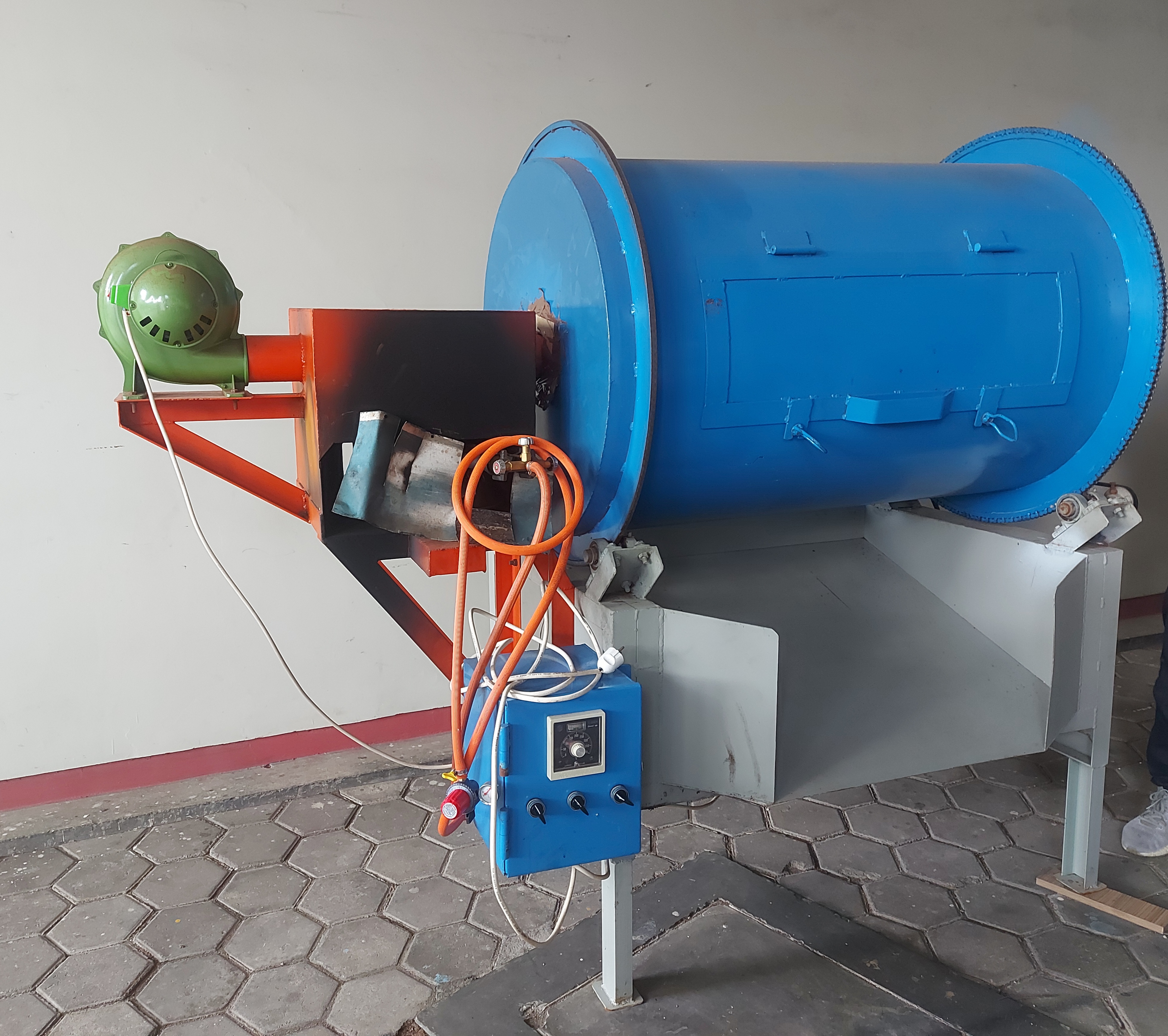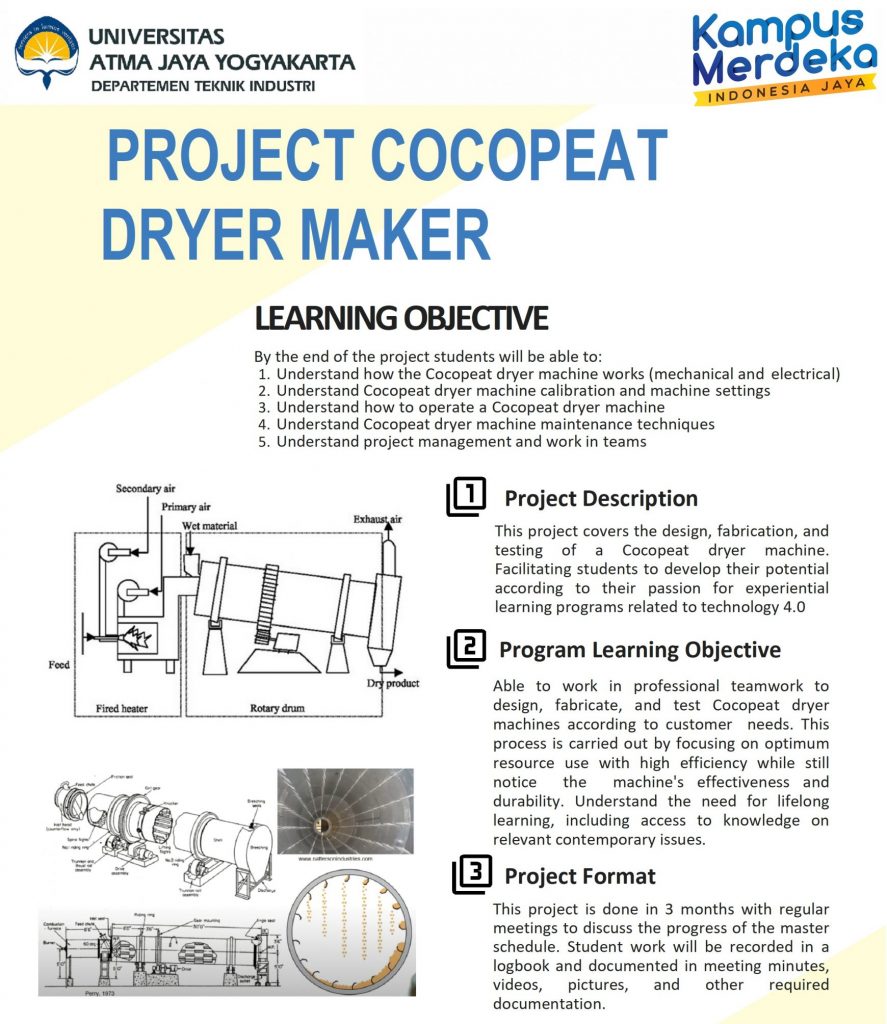
This project involved Industrial Engineering students from Universitas Atma Jaya Yogyakarta in the research, design, and experimental optimization of a rotary drum dryer for processing cocopeat—a sustainable byproduct derived from coconut husks. The initiative aimed to support the valorization of agricultural waste by developing an efficient drying system to reduce cocopeat moisture content to meet export standards (below 10%), thereby enhancing its economic potential and promoting sustainable industry practices.
The team employed a structured methodology, beginning with project definition, division of responsibilities using a RACI matrix, and detailed planning via Work Breakdown Structure (WBS) and Gantt charts. Key project phases included experimental design (DOE), 3D and 2D modeling of the dryer components using SolidWorks, systematic experimentation, and performance testing. The dryer specifications included a 126×100×100 cm drum, a 1 HP drive motor, an axial blower, LPG heating, and a maximum operating temperature of 120°C.
Experimental trials were conducted using a design of experiments (DOE) approach, testing variables such as drying duration (30–150 minutes), temperature (80–120°C), blower speed (50–100%), initial cocopeat moisture, and load weight. Students performed 21 experimental runs, meticulously recording temperature, humidity, and gas consumption data to identify optimal drying parameters.
Several design improvements were implemented during the project. Internal fins were added to the rotating drum to ensure even distribution and drying of the cocopeat. The original square gas burner was replaced with a larger furnace-type burner to increase heating efficiency. Additionally, a chain drive system was installed to resolve drum rotation issues, and sealing measures were applied to reduce material loss through ventilation gaps.
The experiments yielded an optimal configuration: a temperature of 100°C, a drying time of 120 minutes, and an initial load of 10 kg cocopeat with 50% moisture content. This setup successfully reduced moisture levels to approximately 9.03%, meeting the target export standard. However, challenges such as heat loss in the airflow system and inconsistent moisture measurement techniques were noted as areas for further refinement.
In conclusion, the project successfully developed and optimized a functional cocopeat dryer prototype, demonstrating the potential for efficient, scalable processing of coconut waste. Students gained valuable experience in thermal system design, DOE application, data analysis, and iterative machine improvement. The project underscores the role of engineering in supporting sustainable agriculture and adding value to local resources through technological innovation.