
This project involved the design, fabrication, and testing of a custom Fused Deposition Modeling (FDM) 3D printer by Industrial Engineering students at Universitas Atma Jaya Yogyakarta. Initiated as a professional learning activity aligned with Industry 4.0, the project aimed to provide hands-on experience in advanced manufacturing technologies, especially after original internship plans were redirected due to the COVID-19 pandemic.
The development followed a systematic methodology, starting with project definition, personnel assignment, and specification determination. The team designed a printer with a 220x220x250 mm build volume, using an aluminium profile frame for rigidity and lightness. Key specifications included a 0.4mm nozzle, compatibility with 1.75mm PLA filament, a 32-bit controller for smoother operation, and a heated print bed. The design process involved iterative evaluation of mechanical, frame, and electronic components before moving to fabrication.
The fabrication phase was executed in three main stages: first, assembling the aluminium frame and installing the X and Y axis sliders; second, mounting the hot end assembly and connecting the stepper motors; and finally, integrating all electronic components, including the controller, power supply, sensors, and the user interface touchscreen.
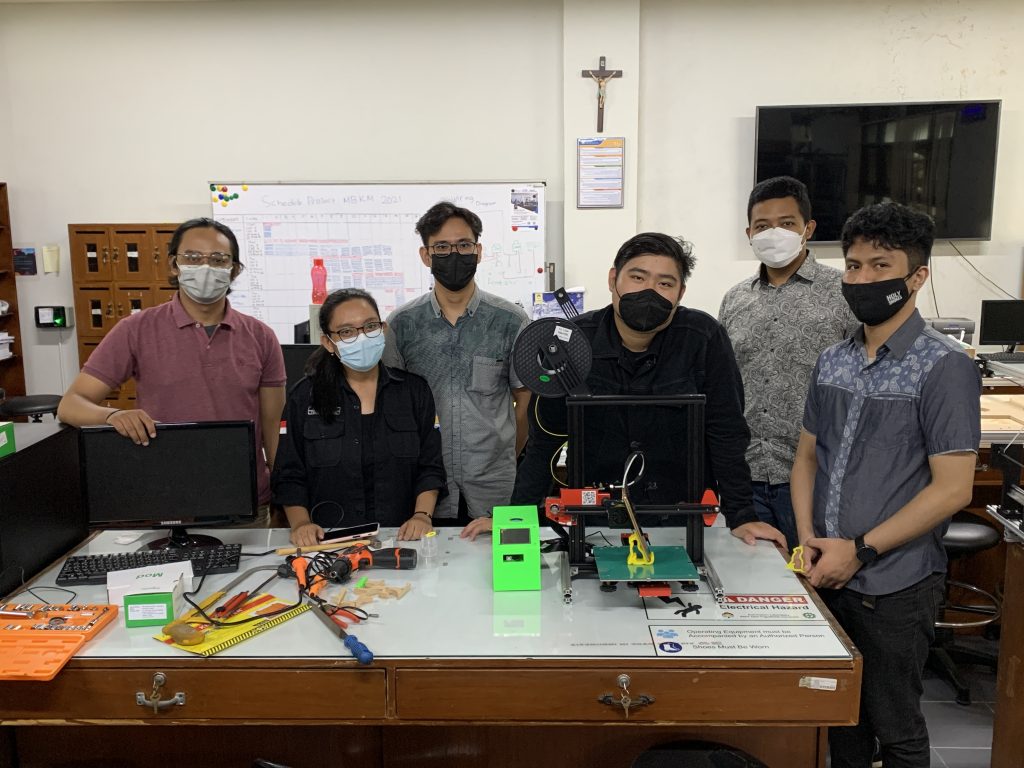
Rigorous testing was conducted to ensure functionality and reliability. Initial checks verified the firmware and all touchscreen interface controls. Subsequent tests confirmed the operation of cooling fans, limit switches, and the precise movement of all axes (X, Y, Z, and the extruder E). Advanced features like the auto-leveling sensor (tested across 25 grid points) and filament runout detection were also successfully validated.
The printer’s capability was demonstrated by producing three test objects: a fishpond drain filter designed in SolidWorks, and two UAJY and FTI Christmas tree keychains designed in ArtCAM. Each design was converted to G-code using Cura 4.7 software and printed. Dimensional and visual inspections confirmed high accuracy, with measured deviations of only ±0.1mm from the original designs, meeting the target precision.
In conclusion, the project successfully achieved its objectives of creating a reliable, rigid, user-friendly, and low-maintenance 3D printer. The team gained comprehensive practical knowledge in mechanical assembly, electrical systems integration, and operational software workflow—from CAD design to G-code generation and standalone printing via SD card.
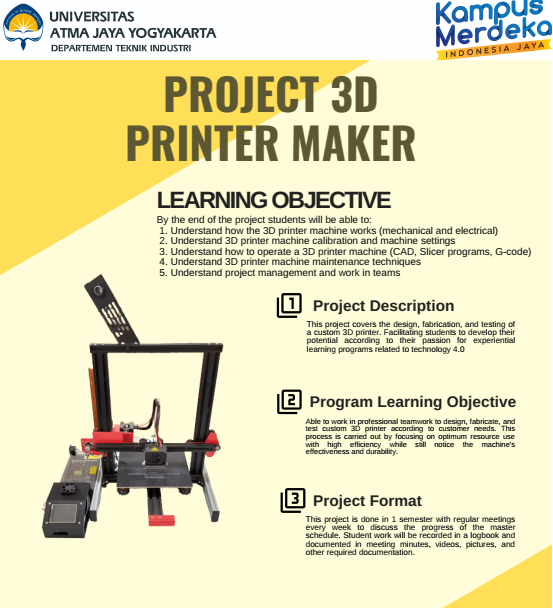
The final output is a fully functional FDM 3D printer that operates independently without a computer, serving as a valuable resource for future prototyping and educational activities within the university, while equipping students with critical skills in modern digital manufacturing.